Services
Everything your smile needs, in one office.
Comprehensive dental care, from preventive treatment to restorative and cosmetic dentistry — all in one office.
Preventive
Preventive
Thorough EvaluationLearn more →Close ×
Alexandra Jaquery DDS, MS in Watsonville, CA provides more than just dental cleanings and cavity fillings. The comprehensive dental care she provides includes assessments and oral disease prevention. Oral health is directly linked to overall health, making this comprehensive care as important as your regular family physician visits. Dental findings can sometimes lead to a referral to a family physician for further testing.
On a patient’s initial visit, we do a thorough examination to assess and document all oral tissue and bones. We’ll obtain a patient history, including a list of all current medications (vitamins and natural remedies as well), dental and medical histories, allergies, previous surgeries or hospitalizations, and habits (such as smoking and drinking). All of these factors help guide the examination, helping us identify specific high-risk areas that need to be monitored.
A full set of X-rays is obtained to see deep into the bones and soft tissues inside the jaw. These images will not only show immediate problems, but will also provide a baseline to follow when getting X-rays at later visits.
During the visual inspection, Dr. Jaquery will also examine the lips, gums, cheeks, and lymph nodes and look for evidence of oral cancer.
Professional Teeth CleaningLearn more →Close ×
Are you looking for a family dentist in Watsonville, CA? Alexandra Jaquery DDS, MS is taking new patients. Dr. Jaquery offers full dental services to optimize your family’s oral health.
The American Dental Association and most dentists, including Dr. Jaquery, recommend having your teeth professionally examined and cleaned at least twice a year. You may need to come in for additional exams and cleanings if you have a persistent oral health condition, such as gum disease. But for most people, twice a year is a good guideline.
A professional cleaning is about more than just cleaning your teeth. It’s a way to keep track of your overall oral health. Regular dental exams and cleaning visits are essential in preventing dental problems and maintaining healthy teeth and gums. At these visits, we clean your teeth and check for cavities and potential issues. There are other tools we use to help detect and prevent problems and maintain your dental health, including:
Your medical history: Knowing the status of any current medical conditions, new medications, and illnesses gives us insight into your overall health and your dental health.
Diagnostic X-rays: Essential for detecting decay, tumors, cysts, and bone loss, X-rays also help determine tooth and root positions.
The Importance of Professional Teeth Cleanings
Dentistry has evolved immensely over the last century. Early dentistry only addressed problems with the oral cavity after they advanced to pain. So, going to the dentist was, in fact, a dreaded necessity. Now, we know that keeping teeth healthy helps with overall good health, and taking care of problems before they become serious is far less painful.
Good oral health starts with good oral hygiene. Besides brushing and flossing at home twice daily, professional teeth cleaning is also recommended every six months. The goal of clean teeth is to keep plaque from accumulating on the teeth and causing damage to the enamel.
Professional cleanings are done by certified dental hygienists with special cleaning tools. Stubborn plaque that has escaped brushing is removed with scaling tools. Once your teeth are flossed and polished, Dr. Jaquery will examine them.
What to expect at a dental cleaning
Your hygienist will perform your dental cleaning, and then Dr. Jaquery will step in to thoroughly examine your teeth and mouth. Your cleaning will typically include:
Calculus (tartar) removal: Calculus is hardened plaque that has been left on the tooth for some time and is now firmly attached to the surface. Calculus forms above and below the gum line and can only be removed with special dental instruments.
Plaque removal: Plaque is a sticky, almost invisible film that forms on teeth consisting of a growing colony of living bacteria, food debris, and saliva. The bacteria produce toxins that inflame the gums, whish is the precursor for periodontal disease!
Teeth polishing: Removes stain and plaque that is not otherwise removed during toothbrushing and scaling.
Tooth decay examination: We check all tooth surfaces for decay with special dental instruments.
Examination of existing restorations: We check any fillings, crowns, etc. you may have to make sure they are still intact and do not need replacing.
Gum disease evaluation: We check the gums and bone around the teeth for any signs of periodontal disease.
Oral cancer screening: We check your face, neck, lips, tongue, throat, tissues, and gums for any signs of oral cancer.
Review of dietary habits: Your eating habits play a very important role in your dental health.
Oral hygiene recommendations: We will review and recommend oral hygiene aids as needed (electric toothbrush, special cleaning aids, fluoride, rinses, etc.).
As you can see, a professional dental exam and cleaning involves quite a lot more than just checking for cavities and polishing your teeth. We are committed to providing you with the best possible care.
Restorative
Restorative
Composite FillingsLearn more →Close ×
Most everyone has heard of fillings and cavities. Cavities are areas of damage to tooth enamel caused by plaque and bacteria. Once formed, cavities require repair as soon as possible. If left untreated, the decay can spread deeper and wider, requiring a bigger repair and leaving openings for infection to set in.
During a repair, the decay is removed from the enamel after numbing the area around the tooth. After the decay is removed, a hole (or defect) is left in the enamel. A filling is the special dental material used to “fill” the hole and make the tooth whole again. Over the years, “a filling” has become the term used to describe the entire procedure (“getting a filling done”).
Some filling materials are made of silver metal. Most patients prefer not to use silver fillings unless they are in the back of the mouth. Some patients do not want silver fillings at all. While the metal material is very strong and holds up well under the strong chewing forces in the mouth, a newer filling material is available that is also very strong but not silver.
Composite resin fillings can be used in any area of the mouth. The composite resin is easily matched to the natural color of the teeth. Color matching allows the fillings to blend in seamlessly, making them invisible when speaking or chewing.
Are amalgam fillings safe?
Dr. Jaquery does not use amalgam (silver) fillings. Over the years, there has been concern about the safety of amalgam fillings because they use a blend of copper, silver, tin and zinc bound by elemental mercury. Dentists have used this blended metal to fill teeth for more than 100 years. However, the concern is that exposure to the vapor and particles from mercury can cause a variety of health problems. Although studies indicate that there are no measurable health risks to patients who have silver fillings, mercury is toxic when we are exposed at high levels.
Modern dentistry uses composite (tooth-colored), porcelain, and gold fillings that do not contain mercury.
If you are looking for composite tooth repair options in Watsonville, CA, call for a consultation appointment.
Real Patients, Real Results
CrownsLearn more →Close ×
Crowns are only given to kings and queens, right? Well, for the bejeweled ones, that is true. Fortunately for Dr. Alexandra Jaquery’s dental patients, you can have a crown too (even several of them).
Dental crowns are tooth-shaped caps that fit over the top of a damaged tooth. The cap looks as natural as any other teeth in your mouth and is not noticeable when talking or eating.
Crowns are used for several different dental procedures and appliances:
A crown can be placed over a broken or stained tooth to improve its appearance and function.
A crown is used when getting a dental implant that replaces an entire tooth, including the root.
Crowns are used when doing root canals.
Crowns are used in some types of fixed bridges to bond the bridge inside the mouth.
The type of crown needed for all procedures is always the same. It just serves a different function for the health of the oral cavity.
Real Patients, Real Results
Fixed BridgesLearn more →Close ×
Missing teeth can be embarrassing, making patients self-conscious. Dr. Alexandra Jaquery DDS, MS is an expert at tooth replacement, offering different options to restore any smile.
Bridges are dental appliances that replace missing teeth (or a single tooth). A bridge is a plastic and wire plate that holds the replacement teeth. After the bridge is manufactured, the wires are bonded to the back of the teeth abutting the gap. Bonding to the natural teeth makes the bridge fixed (not removable).
The type of bridge depends on the budget and desires of the patient, but different options are available. A bridge can be bonded to your natural teeth or teeth that have crowns placed on them. One bridge type can be done with only one abutting tooth, which is good for patients missing teeth at the end of the row. Using natural teeth for abutment teeth is more economical than placing crowns on those teeth, but the most expensive and sturdiest type of bridge is bonded to dental implants. This procedure takes several months to complete but offers better stability.
If you are looking for tooth replacement options in Watsonville, CA, call for a consultation appointment.
Real Patients, Real Results
Dentures & PartialsLearn more →Close ×
Missing teeth not only affect the appearance of your smile but also chewing and talking. Dr. Alexandra Jaquery DDS, MS in Watsonville, CA offers several options for tooth replacement. The most common method requested is dentures.
Dentures are designed specifically for the patient’s mouth, making the fit more comfortable. Adjustments will be made when the dentures are first received and will be done anytime afterward if they become uncomfortable.
There are two types of dentures available, and which type you need will depend on how many teeth need to be replaced and where they are located. Full dentures are required if an entire row of teeth is missing (top, or bottom, or both). Partial dentures are for patients who still have some teeth remaining in the row. The frame of a partial denture will have wire integrated into the plate to clip the denture into place. The wires will use existing teeth as anchors.
Whether full or partial, dentures are removable, meaning they are taken out and re-inserted. Removing dentures every day serves a couple of purposes:
- Cleaning — brush dentures gently to remove debris and plaque. Effervescent cleansers are also available to add to the water while they are in storage. When taken out of the mouth, dentures should always be kept in water to keep them from drying out and being damaged.
- Allowing the mouth to rest at night — the mouth has a natural cleaning process that happens while you sleep.
Root Canal TherapyLearn more →Close ×
Root canal therapy is a procedure available to restore a broken or infected tooth that still has a viable root. The root itself may survive an infection if the basic structure is still intact. If the tooth is cracked or broken, the damage needs to be above the gum line.
Preserving the root of a tooth is extremely important in oral health. Keeping the root intact helps to keep the jawbone healthy and the structure of the face intact.
When a root is lost, the bone structures surrounding that area begin to lose bone density. As time progresses, bone loss will continue. Too much bone loss will contribute to the sunken-in look that is associates with patients who have lost many teeth over time. The tooth root was not just filling a hole in the bone; the vibrations from chewing were traveling down the root and into the bone. These sensations stimulated the bone and encouraged bone volume.
When a root is still viable, a root canal can be done to repair any damage inside and restore the tooth above. A small hole is drilled into the tooth after adequate anesthetic is given. The inside of the root is scooped out and dried, then filled with a rubbery compound. The entry hole is filled, and the tooth is prepared to receive a dental crown. The entire procedure is short and fairly painless.
Dental ImplantsLearn more →Close ×
Missing teeth can impact your social and work lives. Your smile is almost always the first thing a person notices when being introduced. That first impression is especially important when it is associated with your work environment.
Dr. Alexandra Jaquery DDS, MS offers a tooth restoration method that has become extremely popular — Dental Implants
More companies are producing the components.
Dental technology is making it easier and more comfortable for the patient to receive them.
Pricing is starting to become more competitive, making them more affordable.
Implants are undoubtedly the healthiest option available for replacing teeth. When a tooth and its root are lost to damage, trauma, or infection, the bony area around where the root was in the jaw begins to deteriorate. The vibrations that are normally sent down through the root when chewing have stopped, causing loss of volume. The sensations caused by the vibrations were encouraging the bone to remain strong and keep regular bone density. The bone volume will go down up to 25% in the first year alone and continue to decline after that.
By choosing a dental implant for tooth replacement, the implant acts as the root and the tooth together, restoring the sensations needed to retain bone density.
During a minor in-office procedure, a titanium screw is placed in the jaw. An abutment piece is placed on top of the screw to attach a crown. A temporary crown is placed until the jaw is fully healed (approximately three to six months). Once healed, the temporary crown is removed and a permanent crown is placed with a much stronger cement.
If you are looking for tooth replacement options in Watsonville, CA, call for a consultation appointment.
Real Patients, Real Results
Teeth ExtractionsLearn more →Close ×
“Like pulling teeth” is an expression heard often about many different situations. While the meaning is pretty obvious (because pulling a tooth is not “easy” and it is associated with a lot of pain), the story behind the saying is a little more in-depth than initially thought.
Dentistry has been around for many centuries, although the dentist’s job at first was to address problems that already exist inside the mouth. In those times, once a problem arose, it was usually too late to actually do anything about it. A trip to the dentist usually meant that a tooth would need to be pulled.
Another big problem with early dentistry is that anesthesia was not available. So, not only did the patient have a toothache, but now they have to have a tooth pulled without anesthetic. This is the root of “dental anxiety” in its basic form.
Lucky for us, dentistry has evolved into a profession with health maintenance in mind and, more importantly, anesthetics are readily available and very reliable. So, pulling teeth (teeth extractions) is not the traumatizing event that it used to be. Fortunately, it is a fairly painless procedure these days. Other than the slight pinch of a needle in the gums, no pain is felt at all while pulling a tooth. Even the shot sensation is minimal due to a numbing gel used at the site of the injection before it is given.
Overall, the process of having a tooth extraction is:
Almost totally painless
A short procedure
Could get the patient the rest of the day off work (but some patients return to their regular daily schedule afterward)
If you need to have a tooth pulled, call and let Dr. Jaquery do it as painlessly and professionally as possible.
Cosmetic

Cosmetic
Cosmetic DentistryLearn more →Close ×
If you are feeling self-conscious about your teeth or just want to improve your smile, cosmetic dental treatments may be just what you need for a more beautiful, confident smile.
Dr. Alexandra Jaquery DDS, MS in Watsonville, CA can do more than clean your teeth. Comprehensive dentistry is not just filling cavities. It also includes cosmetic dentistry. Cosmetic dentistry is any treatment or dental appliance that improves the appearance of your teeth, jaw, or face (if the flaw involves the mouth).
Whether you know exactly what kind of treatment you need to make your smile more appealing or if you need a dental expert to determine the problem, Dr. Jaquery is the dentist to see!
Cosmetic dentistry can be as simple as teeth whitening or require a treatment plan that takes several months to complete. With either solution, you are in good hands with Dr. Jaquery.
Here are a few examples of cosmetic dentistry:
One or more sessions of professional teeth whitening can improve your smile with little to no effort.
Crooked or buck teeth may need to be straightened. Patients who prefer to avoid braces can choose clear aligners for a more natural look. The aligners can usually straighten teeth with less pain and hassle than traditional braces.
Missing teeth really change the appearance of your smile. Several options are available for replacing missing teeth. Implants, dentures, bridges, and veneers are some of the ways Dr. Jaquery can fix gaps in teeth. Dr. Jaquery helps each patient decide which option is best for their unique situation.
Teeth Whitening: Professional whitening lightens teeth that have been stained or discolored by age, food, drink, and smoking. Teeth darkened as a result of injury or taking certain medications can also be whitened, but the effectiveness depends on the degree of staining.
Composite (tooth-colored) Fillings: Composite fillings are widely used instead of amalgam (silver) fillings to repair teeth with cavities and to replace old defective fillings. We also use tooth-colored fillings to repair chipped, broken, or discolored teeth. This type of filling is great for filling in gaps and protecting sensitive, exposed root surfaces caused by gum recession.
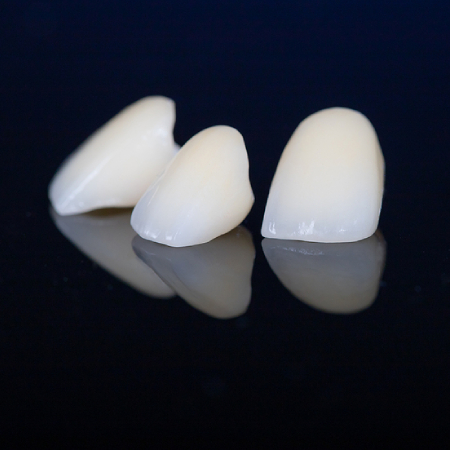
Porcelain Veneers: Veneers are thin custom-made, tooth-colored shells that are bonded onto the fronts of teeth to create a flawless look. They can camouflage damaged, discolored, poorly shaped, or misaligned teeth. Unlike crowns, veneers require minimal tooth structure to be removed from the surface of the tooth.
Porcelain Crowns: A crown is a tooth-colored, custom-made covering that encases the entire tooth surface, restoring it to its original shape and size. A crown protects and strengthens a tooth that cannot be restored with a filling or other type of restoration. A crown is ideal for a tooth with a large, fractured or broken filling and also for a tooth that is badly decayed.
Implants: Dental implants are artificial roots that are surgically placed into the jaw to replace one or more missing teeth. Porcelain crowns, bridges, and dentures can be made specifically to fit and attach to implants, giving you a strong, stable, and durable alternative to removable teeth.
Orthodontics: Less visible and more effective brackets and wires are making straightening teeth with orthodontics much more appealing to adult patients. In many cases, teeth can be straightened using custom-made, clear, removable aligners.
VeneersLearn more →Close ×
I bet you never thought you’d have anything in common with a movie star. Well, if you have veneers, you are using dental appliances that were created for movie stars in the early days of filmmaking.
Actors and actresses did not have perfect teeth over a century ago. The art of dentistry was also not quite as advanced as it is today. When actors started going to their dentists asking for a way to make their teeth look better on film, veneers were created.
Dentists took tooth-shaped material and glued it over stained or malformed teeth. Unfortunately, the glue available at that time was not very strong. The veneers only stayed on for two to three days and had to be reapplied.
Adhesive and dental technology has advanced so much in the last century that veneers are much more permanent now. The veneer material is easily matched to the other natural teeth for a flawless appearance. No one would know you had veneers unless you told them. The adhesive is strong enough for the veneer to remain in place indefinitely. If an accident were to dislodge one, it is simple to replace it.
If you feel that veneers could help your stained or malformed teeth or cover a gap in your teeth, call Dr. Jaquery to discuss your options.
What are Veneers and how can they improve my smile?
Veneers are thin shells of tooth-shaped porcelain that are individually crafted to cover the fronts of teeth. They are durable and will not stain, making them a popular solution to restore:
Discolored or stained teeth
Unwanted or uneven spaces
Worn or chipped teeth
Slight tooth crowding
Misshapen teeth
Teeth that are too small or large
How are veneers placed?
Veneers usually require two appointments. They are created from a mold of your teeth that is sent to a dental laboratory where each veneer is custom made for shape and color. With local anesthesia, the teeth are prepared by lightly buffing and shaping the front surfaces. The ultra-thin veneers are bonded onto your teeth with special cement, which is then cured with a light.
Once your veneers are in place, Dr. Jaquery will check them and make fine adjustments as needed to ensure your veneers look and feel as natural as possible. And then, you can enjoy a flawless smile for many, many years.
If you are looking for cosmetic dentistry options like porcelain veneers, call for a consultation appointment.
Real Patients, Real Results
Teeth WhiteningLearn more →Close ×
What’s the first thing you notice when you meet someone new? It’s usually a person’s smile. Everyone wants to make a good first impression, whether in social situations or at work, and yellow or stained teeth can be embarrassing.
What is Teeth Whitening?
You’ve probably noticed that the toothpaste aisle at your local drugstore is full of products that claim to whiten your teeth. There’s no doubt about it, teeth whitening is big business. But, over-the-counter whitening toothpaste, strips, mouth molds, gels, and creams can be confusing, messy, and disappointing. Before spending money on do-it-yourself kits, call Dr. Jaquery’s office in Watsonville, CA for information on professional teeth whitening. Professional whitening is faster and provides more impressive results than the home kits available.
Whitening compounds are only effective with the correct amount of the activating agent, hydrogen peroxide. Professional whitening formulas are much stronger than the ones in home kits and also require professional supervision. The stronger formula can damage tooth enamel if used incorrectly or left on the teeth too long. Damaged tooth enamel can turn translucent yellow or make the teeth more sensitive to heat and cold.
Professional whitening will produce lighter shades of white, sometimes in only one treatment. The number of visits for each treatment plan will vary depending on the level of whiteness desired, but each treatment only lasts 30 to 60 minutes.
The Whitening Process
First, Dr. Jaquery will evaluate your teeth to determine if you’re a good candidate for professional whitening. Tetracycline and fluorosis stains can be difficult to eliminate completely, and Dr. Jaquery may recommend veneers or crowns as an alternative to whitening.
Pro tip — Since teeth whitening only works on natural tooth enamel, consider replacing old restorations before bleaching begins. After bleaching, Dr. Jaquery will match your new restorations to the shade of your newly whitened teeth. It is also a good idea to whiten your teeth BEFORE your get veneers, because veneers do not respond to whitening treatments.
In-office treatment delivers immediate results. While your gums are protected, a bleaching solution is applied to the teeth. A special light is used to enhance the action of the solution. At the end of the procedure, we apply a desensitizing agent to reduce sensitivity.
Some patients may experience tooth sensitivity after having their teeth whitened. This is temporary and will usually subside within a few days.
Please note that whitening is not permanent. You will need touch-ups to maintain your results. How often you touch up depends on your eating and drinking habits and your desired level of whiteness.
Why Teeth Whitening
With age, the outer layer of tooth enamel wears away, revealing a darker or yellow shade. The color of our teeth also comes from the inside of the tooth, which can become darker over time. Habits like smoking, drinking coffee, tea, and wine also contribute to tooth discoloration, making our teeth yellow and dull. Sometimes, teeth can become discolored after taking certain medications, such as tetracycline, in childhood. Excessive fluoridation (fluorosis) during tooth development can also cause teeth to become discolored.
Professional teeth whitening is a non-invasive dental treatment that brightens and lightens your natural tooth enamel and is an ideal way to enhance the appearance of your smile. Over-the-counter products are also available, but they are less effective and may not be approved by the American Dental Association (ADA).